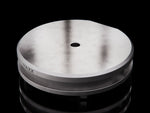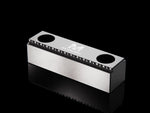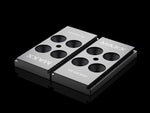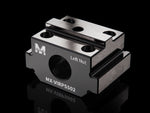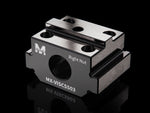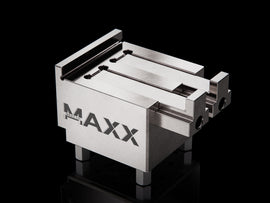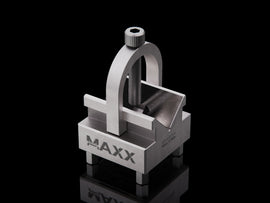
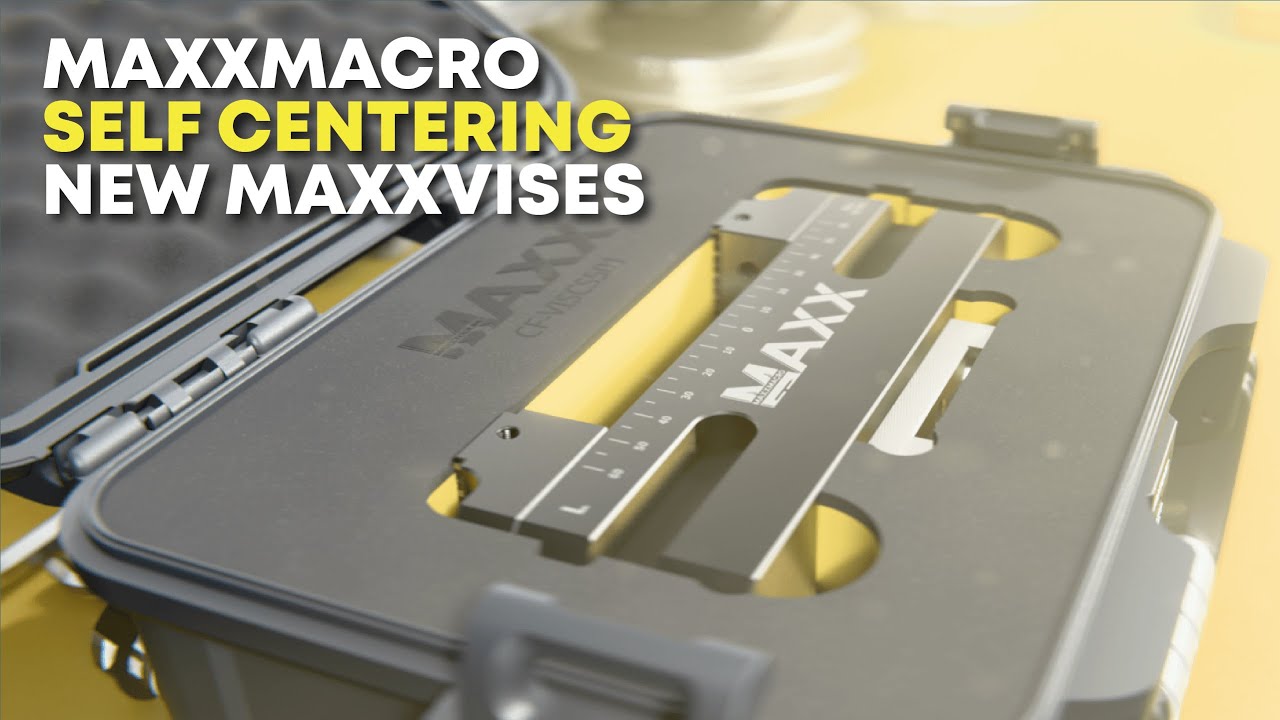
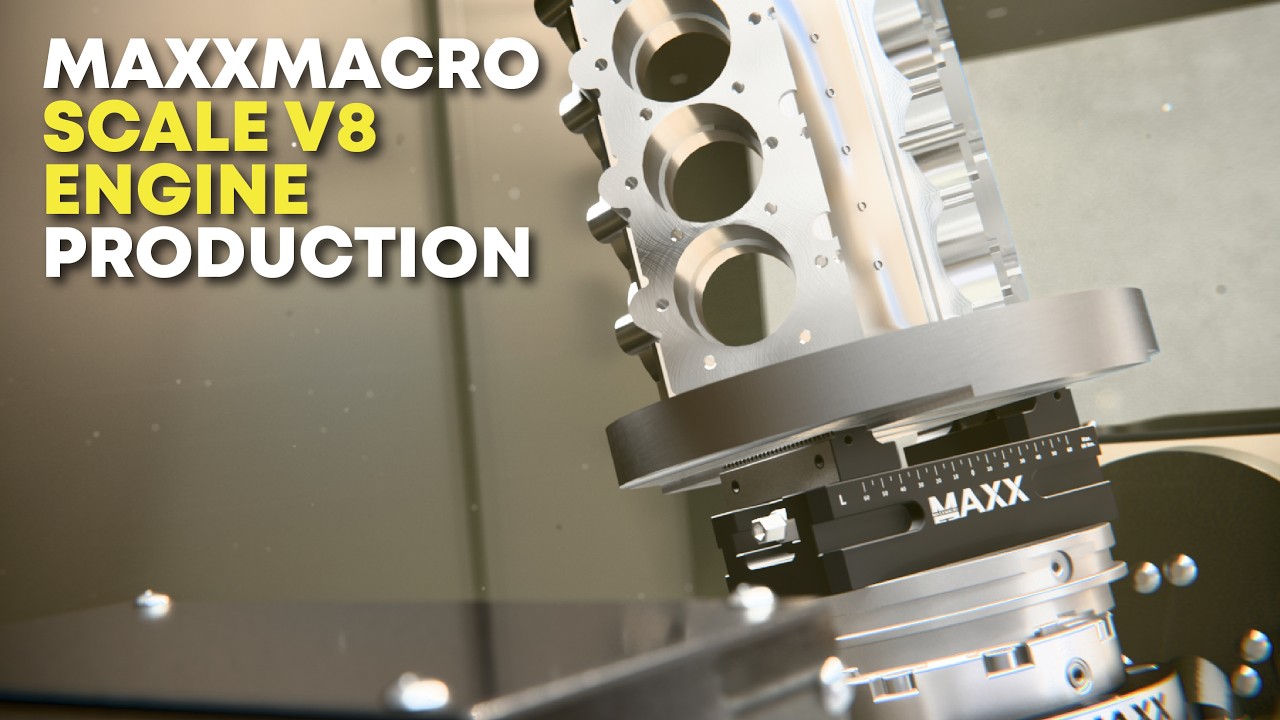
Precision-engineered self-centering vise designed for high-accuracy machining applications. Featuring a robust build and dual screw mechanisms, it ensures perfect workpiece alignment and repeatability. With a clamping range of...
Availability:
Approximately 2-3 weeks, contact us for more information.
Availability:
Approximately 2-3 weeks, contact us for more information.
Precision-engineered self-centering vise designed for high-accuracy machining applications. Featuring a robust build and dual screw mechanisms, it ensures perfect workpiece alignment and repeatability. With a clamping range of 120 mm, it’s ideal for 5-axis CNC operations, modular setups, and quick part changes.
Maxx-ER G Stainless Self Centering Vise 80x120mm with 148mm Pallet
SKU
ME-VISCS504
System
Maxx-ER
System Repeatability
0.002mm
Material
Stainless 420
|
Pallet: Stainless 420C Unhardened
Weight
7.72 kg | 17.02 lb
Returns Policy
You may return most new, unused items within 30 days of delivery for a refund. There is a 20% restock fee if the item is returned due to customer error. The customer is responsible for the return shipping costs if the return is a result of your error (Not if received an incorrect or defective item, etc.).
You should expect to receive your refund within four weeks of giving your package to the return shipper, however, in many cases you will receive a refund more quickly. This time period includes the transit time for us to receive your return from the shipper (5 to 10 business days), the time it takes us to process your return once we receive it (3 to 5 business days), and the time it takes your bank to process our refund request (5 to 10 business days).
If you need to return an item, simply login to your account, view the order using the 'Complete Orders' link under the My Account menu and click the Return Item(s) button. We'll notify you via e-mail of your refund once we've received and processed the returned item.
Shipping
We can ship to virtually any address in the world. Note that there are restrictions on some products, and some products cannot be shipped to international destinations.
When you place an order, we will estimate shipping and delivery dates for you based on the availability of your items and the shipping options you choose. Depending on the shipping provider you choose, shipping date estimates may appear on the shipping quotes page.
Please also note that the shipping rates for many items we sell are weight-based. The weight of any such item can be found on its detail page. To reflect the policies of the shipping companies we use, all weights will be rounded up to the next full pound.
International shipments it is the customers responsibility to determine if there are any taxes or import duties payable and to make arrangements to clear and pay these fees if applicable.
A self-centering vise is a precision workholding device designed to move both jaws simultaneously toward the centerline of the vise. Unlike conventional vises, where one jaw remains fixed while the other moves independently, a self-centering vise clamps the workpiece symmetrically from both sides.
This design provides several important advantages for CNC machining operations:
Automatic workpiece centering
Improved setup repeatability
Reduced operator alignment errors
Consistent datum positioning between operations
Better machining stability
Self-centering vises are commonly used in:
3-axis and 5-axis CNC milling
High-precision mold manufacturing
Production machining
Automated machining cells
Multi-part fixturing environments
Because the part remains centered during clamping, machinists can achieve greater accuracy, faster setups, and more consistent machining results. Maxx Tooling offers a wide variety of Self Centering Vise, compatible with different systems, and in different sizes, to suit all your needs.
Why Is Self-Centering Workholding Important in Milling?
In CNC milling, positional consistency directly affects machining accuracy, surface finish quality, and overall production efficiency. Even small alignment variations can create dimensional errors, increase setup verification time, and reduce process reliability.
MaxxTooling Self-centering workholding systems improve milling performance in several ways.
Improved Repeatability
Because the workpiece automatically centers relative to the vise body, operators can achieve highly repeatable setups across multiple batches and machine changes.
Better Process Control
Consistent centering simplifies CAM programming, probing routines, and fixture offsets, especially in multi-axis machining applications.
Reduced Setup Time
Operators spend less time manually aligning stock material, reducing downtime and improving spindle utilization. This is especially valuable in short-run production and high-mix manufacturing.
Enhanced Surface Finish
Balanced clamping pressure improves rigidity and minimizes micro-movement during aggressive cutting operations, helping reduce chatter and improve surface finish quality.
Greater Automation Compatibility
Robotic loading systems rely on predictable positioning. Self-centering vises provide a repeatable reference point that supports automated and lights-out machining environments.
For manufacturers focused on machining consistency, process reliability, and spindle uptime, modern self-centering workholding systems can significantly improve operational efficiency.
What are the drawbacks of conventional workholding in Machining vs Self Centeging Vises?
As machining tolerances become tighter and production efficiency becomes more critical, many machine shops discover that traditional vises create limitations in precision, setup consistency, and tool accessibility. The comparison below highlights common machining challenges and how self-centering vises improve milling performance.
Machining Factor
Conventional Workholding
Self-Centering Vises
Vibration and Workpiece Stability
Uneven clamping pressure can allow slight workpiece movement during aggressive cutting, increasing chatter and reducing surface finish quality.
Symmetrical clamping distributes force evenly across the workpiece, improving rigidity, reducing vibration, and enhancing machining stability
Alignment and Datum Consistency
Operators often manually indicate or align parts, increasing setup variability and positioning errors.
The workpiece automatically centers on the vise axis, improving repeatability and maintaining consistent datum locations.
Setup Time
Manual positioning and alignment increase machine downtime and operator intervention.
Faster loading and automatic centering reduce setup time and improve spindle utilization.
Tool Accessibility
Larger vise bodies and tall jaws can restrict cutter access, especially in 5-axis machining.
Compact, low-profile designs improve tool clearance and reduce interference risks.
Multi-Axis Machining Capability
Conventional vises may limit rotational movement and create collision risks during simultaneous multi-axis operations.
Self-centering vises maximize A-axis and B-axis clearance for greater machining flexibility.
Repeatability in Production
Position consistency may vary between operators and setups.
Consistent centering improves repeatability across batches and automated workflows.
Automation Compatibility
Manual alignment requirements complicate robotic loading and unattended machining.
Predictable positioning supports robotic automation and lights-out manufacturing.
What Basic Self Centering Vise Configurations Does MaxxTooling Offer?
MaxxTooling offers a versatile, high-performance range of Self-Centering Vises designed to deliver maximum rigidity, absolute repeatability, and unmatched efficiency in demanding CNC environments. Engineered for flexibility, our self-centering lineup includes MaxxMacro® and Maxx-ER compatible vises, providing a robust yet compact workholding solution that effortlessly adapts to both small and complex workpieces.
To ensure seamless integration with your existing automation and tooling setups, all MaxxTooling Self-Centering Vises are engineered to fit our premier modular base systems:
These modular systems allow machinists to seamlessly adapt their workholding setups to varying machining requirements, forward-thinking automation strategies, and complex fixture layouts, all while maintaining the strict precision and heavy-duty clamping stability your shop demands.
What types of accessories for Self Centering Vise does MaxxTooling provide?
One of the major advantages of modular workholding systems is the ability to configure the vise for specific machining applications.
Helps ensure uninterrupted production and consistent machining performance.
One of the key advantages of modular workholding systems is that operators can replace individual components instead of replacing the entire vise assembly. This reduces maintenance costs and minimizes machine downtime.
MaxxTooling also provides technical support, replacement information, and maintenance guidance to help manufacturers maintain reliable CNC workholding performance.
Conclusion
As machining tolerances become tighter and manufacturers demand greater production efficiency, precision workholding systems play an increasingly important role in CNC machining success.
Self-centering vises help solve common machining challenges by improving:
Repeatability
Stability
Setup speed
Tool accessibility
Multi-axis machining capability
Automation readiness
For machine shops focused on precision milling, process consistency, and reduced downtime, modular self-centering workholding systems provide a strong foundation for long-term manufacturing efficiency.
With modular configurations such as MaxxMacro® and Maxx-ER, MaxxTooling offers flexible CNC workholding solutions designed to support modern machining environments while maximizing spindle uptime, repeatability, and machining performance.
To request our Self Centering MaxxVise catalog or to contact our team directly, reach out today via the website chat at the bottom of the page or by email to sales@maxxtooling.com
At MaxxTooling, we're always looking for ways to improve your experience with our products and services. This year, we introduced a major update to our SKU system, designed to simplify product identification, improve inventory management, and enhance your overall experience. Here’s what this new system brings to the table—and how it benefits you.
What is a SKU? A SKU (Stock Keeping Unit) is a unique identifier used to track a product in inventory and make it easy to identify.
Why Did We Update the SKU System?
As our product family expands, we needed a improved SKU system that would deliver the following benefits:
Consistency and Clarity: SKUs now follow a single, well-defined rule, making them easier to read and understand.
Family and Product Matching: Each SKU reflects its product family, allowing you to identify compatible items more easily.
Support for Future Growth: The new format makes it simple to accommodate new product introductions, family expansions, and variations.
Integration with Adapter Plates and Custom Products: The revised structure also allows for easier integration of adapter plate codes, optional parts, and other customization options.
Better ERP and Spreadsheet Integration: Standardized SKUs streamline data entry, making it easier to integrate with ERP systems, spreadsheets, and custom properties.
What Does the New SKU Format Look Like?
Our SKUs now follow a standardized, informative structure:
MX-XXXXMSSS(-O-CODE)
Here’s what each section means:
Prefix (MX/MM): Identifies MaxxTooling or MaxxMacro as the source, with additional prefixes planned for future products.
Family Code (XXXX): A four-character code indicating the product family.
Material Code (M): One character indicating the material.
Size Code (SSS): Three digits denoting the product’s size or model.
Optional Code (O): A single character used for optional features, such as performance enhancements, index-disabled features, MXRefix systems, etc.
Adaptation Code (-CODE): Optional codes for adapter plates, machine-specific modifications, or client custom modifications.
Revision Dates and Compatibility Page
The SKU update process has occurred gradually over the year, with different products receiving updates at different times. Each updated SKU has a specific Revision Date that you can check to ensure compatibility with your needs.
To make this transition easier, we’ve created a dedicated SKU Compatibility Page, where you can:
Look up compatibility between old and new SKU formats
Check revision dates for each product
Access the latest product pages for detailed specifications
New Laser Markings for Improved Operator Experience
Along with our SKU system update, we’ve also made a significant improvement to the way we laser engrave our products. All of our items now feature new, detailed laser markings that provide essential product information directly on the part. This includes data such as ports, maximum torque values, and other key specifications. These updates make it easier for operators to quickly identify important features, improving workflow efficiency and reducing the chance of errors. The enhanced laser markings are part of our ongoing commitment to making your experience with our products as seamless and efficient as possible.
Our Commitment to Continual Improvement
Updating our SKU system is just the beginning. As we continue expanding and enhancing our product offerings, we’ll keep refining this system to support future growth and product variations. Our goal is to make it as easy as possible for you to select, track, and integrate our products into your workflows.
Thank you for choosing MaxxTooling as your workholding partner. Please explore our SKU Compatibility Page for more information, or feel free to reach out if you have any questions.